Book Review: Meditations For Mortals
By: Oliver Burkeman
Introduction
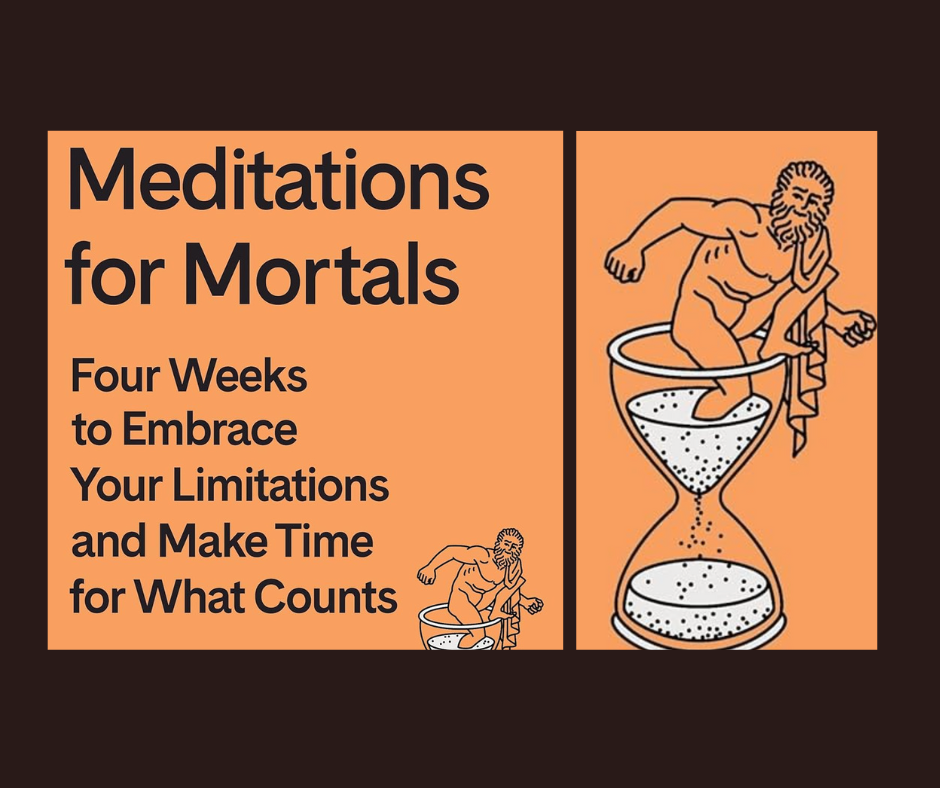
I recently read Meditations for Mortals by Oliver Burkeman. The book is structured as 28 short chapters each surrounding the author’s main topic:
Our constant desire for control in a life that is both finite and unpredictable.
Rather than offering productivity hacks, Burkeman suggests for us to reshape our ideas of perfection, certainty, and total control. Below are the topics that resonated most with me along with my occasional two cents.
Embracing Imperfection
Life will never be stable or fully under our control. Peace comes from accepting imperfection and performing our best anyway. We will never produce perfect work every single time. Waiting for perfection delays meaningful action now. The goal is not flawlessness, but showing up in the present day, at our best.
The Doer Beats the Planner
Action compounds faster than preparation. Small daily efforts that are compounded over time lead to huge results. The key here is that we must take ACTION. He brings up how planning can become avoidance disguised as productivity.
It makes us feel good when we plan but in all reality, we haven’t done much at all, the real work is in the actions we take towards that plan.
Action Over Anxiety
Worry doesn’t prepare us for the future, action does.

Small Steps Win
Prefer consistency over intensity. Break tasks down until resistance disappears and the act becomes natural. This is crucial in building new skills. Start small and develop over time.
Shrink Your Fears
Take the smallest possible step toward what you avoid. Fear dissolves when approached incrementally, like taking a bite from a slice of pizza. Taking it down slice by slice. Slowly chipping away at the problem until the problem is no more.
The Productivity Trap
Productivity systems can create an illusion of meaningful work.
The Allure of To-Do Lists
Crossing things off your To-Do list feels like control. Having control over our lives is something that we yearn for. However, Burkeman brings up how over structuring can become a way to feel worthy or accomplished.
I myself have been guilty of this with my Notion agenda, over-engineering my daily To-Do list to feel productive. Creating this allure of busy work and feeling of having things under control when a lot of it was just fluff.
Since this read, I’ve simplified my Notion agenda to serve me and only show me at a high level what I must do instead of adding micro-details. When I look back, a lot of my over-planning wasn’t about clarity, it was about trying to feel safe.
Anxiety and High Achievers
There’s also an anxiety component here that Burkeman points out in high achievers. Highly driven and successful people are often anxious, not because they’re failing, but because they’re searching for security or control. Prominent positions in society can give us this type of security or control we often seek for in our lives.
To-Do Lists as Menus
I really enjoyed Burkeman’s idea of viewing our To-Do lists as restaurant menus, choosing what we want to do versus following some strict sequence or system.

Burkeman encourages us to treat tasks as options, not obligations. To choose our To-Do’s based on energy and context, not rigid rules. When we follow strict rules we are less likely to enjoy them.
Sustainable Discipline
Progress requires repeated effort, but too many rules can kill momentum.
Just Show Up
Inspiration and motivation are unreliable, discipline matters much more. Be kind to yourself while staying committed. Do not bash yourself like an enemy, but treat yourself as a friend would.
Allow For Flexibility
“Never miss” creates shame and makes you a victim to punishment for missing your streak. Hyper-toughness often hides fear. Flexible consistency keeps us going.
I don’t think Burkeman is arguing against discipline itself here but he’s arguing against rules that begin to rule you. Non-negotiables can be powerful, especially in fitness or skill building, but missing a day doesn’t mean you’ve failed. Discipline that allows room for being human is the kind that actually lasts.
Flexibility Creates Enjoyment
This reminded me of how I enjoy the gym more when I train freely instead of following an overly detailed workout plan. In the past, I’ve brought a notebook to the gym and noticed the workout became less enjoyable when having to write out each workout, repetition, and set that I performed. This over-planning and control got rid of the freedom and spontaneity that I originally enjoyed from the gym.
Having the freedom to change at any moment and follow a high level plan (in my head) versus some strict plan made working out much more enjoyable. Nothing ever goes exactly as planned anyway, especially in the gym. Someone can be using the machine or weights you want for example, causing you to adjust your plan. This room for flexibility creates freedom and sustainability, as I’ve seen first hand in the gym.
Meaningful Difficulty
A good life isn’t problem free, it’s filled with the right problems.
Seek Good Difficulty
Choose challenges that allow you to become a better person. Challenges that interest you and give your life purpose. Growth always beats comfort and growth comes from facing difficulty.
Develop a Taste for Problems
Every meaningful life includes struggle. Purpose comes from solving worthwhile problems.
This reminds me of movies and how the best superheroes are heros because they’ve overcome some type of struggle or adversity. Being perfect would be boring and a story that no one would want to watch. Having problems and solving them is what makes for a great story! I’ve always aspired to have this type of story of my life.
Freedom From Judgment & Control
Let go of managing how others perceive you.
People Aren’t Thinking About You
Others are absorbed in their own lives, everyone is the main character in their own movie. Other peoples judgments reflect them, not you.
Let the Mess Show
Everyone has internal chaos. No family, marriage, relationship is problem-free. Showing imperfection builds connection amongst people.
This explains why authenticity resonates with people often on social media. People can find interest in a certain person more due to their natural personality, flaws and all, making them relatable.
Quantity Over Perfection
Let many ideas through the gate, don’t get stuck on the perfect one. Creation requires volume, not perfection. This is crucial with practicing a new skill. The more you repeat the process of producing, the better result you get from what is being produced.
Presence Without Pressure
You don’t need to optimize every moment to live well.
It’s Okay to Be Distracted
Life is constantly moving, we get distracted, its normal. Presence doesn’t mean perfect attention.
I see this same topic in Cal Newport’s Deep Work, where he suggests allotting time slots of your day for “focused deep work”. The rest is often spent on light tasks. As humans we have a limited amount of energy for focused work, use it wisely and don’t worry about it not being on 24/7.
Flowing Through Life
Life moves like a river, resistance to it creates suffering.
Adapt With Every Change
Everything changes. Don’t cling or fixate on certain moments. Be like a kayak, moving with the current at each change, adapting and continuing to move forward.

Accepting Uncertainty
Burkeman reminds us that people in earlier centuries lived with far more uncertainty than we do today. Bringing up how the people of the medieval times were exposed to way worse uncertainties due to the lack of technological advancement and information that we have today.
Waiting until everything is figured out only delays living. We can tolerate not knowing far more than we think. This is why we must be okay with what we don’t have control over.
Relieving ourselves of this need for control or a perfect scenario opens our lives up to more peace. It creates less stress and simplifies our problems by keeping ourselves focused on the present moment.
Conclusion
Meditations for Mortals isn’t about doing more, it’s about loosening our need for full control and perfection. Accepting imperfection doesn’t mean letting life pass us by, it means choosing wisely, acting consistently, trying our best, and forgiving ourselves for being human.
Life unfolds moment by moment, each moment requiring us to figure out how we’ll spend it. We’ll never achieve total control or invulnerability to problems, but the choices of action and presence are always available if we choose them.